The Red Devils face their biggest rebuilding challenge in decades! After a tumultuous 2024-25 season that saw Erik ten Hag dismissed and Ruben Amorim’s difficult start, Manchester United enters the new campaign without European football for the first time since 2014-15. With significant summer signings including Benjamin Sesko, Bryan Mbeumo, and Matheus Cunha, the Portuguese tactician aims to restore glory to Old Trafford. This season represents a crucial crossroads for the world’s most popular football club.
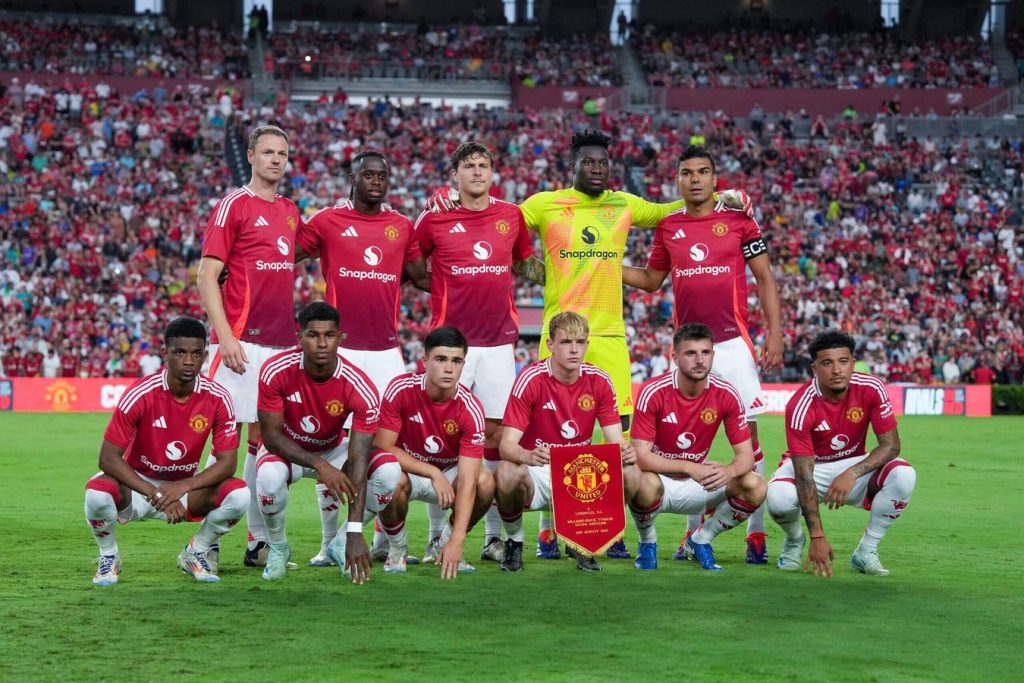
Table of Contents
Manchester United FC Overview
The Red Devils stand as England’s most successful club, boasting a record 20 league titles, 13 FA Cups, and 3 Champions League trophies. Based at the legendary Old Trafford since 1910, the “Theatre of Dreams” (capacity 74,879) remains one of football’s most iconic venues. Under the Glazer ownership since 2005, with recent minority investment from Sir Jim Ratcliffe’s INEOS, the club has undergone significant changes both on and off the pitch.
Known worldwide as “The Red Devils” for their iconic red home kit, Manchester United commands the largest global fanbase in football. The club’s rich history includes the legendary Sir Alex Ferguson era (1986-2013), which delivered 13 Premier League titles and established United as a global powerhouse. Recent years have seen struggles to recapture past glories, with multiple managerial changes failing to restore consistent success.
The appointment of Portuguese tactician Ruben Amorim in November 2024 marked another attempt at revival, though his first season proved challenging. The 39-year-old’s task is monumental: restoring United to Champions League football while implementing his possession-based 3-4-3 system with a significantly rebuilt squad.
Current Season Preview
League Position: Starting 2025-26 season (no European football)
European Competition: None (first time since 2014-15)
Key Competitions: Premier League, FA Cup, EFL Cup
Amorim’s first season exceeded expectations in terms of challenge rather than success. The Portuguese manager inherited a team in crisis and faced the unprecedented situation of finishing outside European qualification. His tenure began with promise but was marred by inconsistent performances, tactical growing pains, and a squad struggling to adapt to his demanding 3-4-3 system.
The summer transfer window brought significant investment with over £250 million spent on new talent. Benjamin Sesko from RB Leipzig (£74m), Bryan Mbeumo from Brentford (£45m), and Matheus Cunha from Wolves (£35m) represent Amorim’s vision for an attacking, possession-heavy approach. These signings indicate INEOS’s commitment to long-term planning despite short-term struggles.
Indian fans will witness a fascinating rebuilding project this season. Without European distractions, United can focus entirely on domestic competitions. Premier League matches typically kick off at 12:30 AM IST (weekend) or 1:30 AM IST (midweek), providing perfect viewing times for subcontinental audiences.
What Went Wrong in Previous Season
Europa League Final Defeat: Amorim’s tenure peaked with reaching the Europa League final, only to suffer a heartbreaking 1-0 defeat to Tottenham Hotspur in Bilbao. The loss meant no European football for 2025-26.
Premier League Struggles: Finishing 15th in the Premier League represented United’s worst campaign in over 50 years. The team managed just 40 points from 38 games, closer to relegation than Europe.
Tactical Transition Pains: Amorim’s 3-4-3 system demanded significant adaptation. Many players struggled with positional requirements, leading to defensive vulnerabilities and attacking inconsistencies.
Squad Unrest: Several high-profile players including Marcus Rashford (loaned to Barcelona), Alejandro Garnacho, Antony, and Jadon Sancho sought moves away, creating instability and reducing squad depth.
Injury Crisis: Key players missed crucial periods, with defensive injuries particularly damaging. The lack of squad depth was exposed across multiple competitions.
Why Manchester United FC is a Smart bet for 2026
The Perfect Storm for Revival
Manchester United enters 2025-26 in a unique position that savvy football observers recognize as the ideal setup for a dramatic resurgence. While critics focus on last season’s struggles, smart money sees the convergence of factors that historically precede United’s greatest comebacks. The absence of European football, significant investment, and a proven tactical innovator create conditions reminiscent of Ferguson’s early years.
Amorim’s Proven Track Record
Ruben Amorim isn’t just another promising manager – he’s a transformation specialist with receipts. At Sporting CP, he inherited a club that hadn’t won the league in 19 years and delivered the title in his first full season. His 3-4-3 system turned average players into title winners and developed unknowns into €50+ million stars. The Portuguese’s ability to maximize squad potential while implementing sophisticated tactics makes him perfectly suited for United’s current challenge.
The 39-year-old’s Champions League experience, including that stunning 4-1 victory over Manchester City in his final home game at Sporting, demonstrates his capacity for tactical masterclasses against elite opposition. His player development record speaks volumes – Viktor Gyokeres, Pedro Goncalves, and Nuno Mendes all flourished under his guidance before earning big-money moves.
For those looking at football betting markets, United’s current odds for top-four qualification represent exceptional value given their improved squad depth and lack of European distractions.
Key Figures and Tactical Development
Ruben Amorim (Manager): The 39-year-old Portuguese tactician brings Champions League-winning experience from Sporting CP. His 3-4-3 system emphasizes possession, high pressing, and wing-back creativity. Amorim’s attention to detail and youth development background make him ideal for United’s long-term project, despite initial struggles.
Bruno Fernandes (Captain): The Portuguese midfielder remains United’s creative heartbeat. His versatility allows adaptation to Amorim’s system, whether as an attacking midfielder or deeper playmaker. Fernandes’s leadership qualities and big-game mentality are crucial for squad morale.
Benjamin Sesko (New Striker): The 21-year-old Slovenian represents United’s future. His pace, physicality, and clinical finishing provide the goal threat lacking last season. Sesko’s Champions League experience with Leipzig adds valuable European pedigree.
Kobbie Mainoo (Youth Catalyst): The academy graduate embodies United’s youth development success. His technical ability and composure beyond his years make him perfect for Amorim’s possession-heavy approach.
Amorim’s tactical philosophy centers on patient build-up through short passing combinations. Wing-backs provide width while central midfielders create overloads. The system maximizes technical players like Fernandes while utilizing the pace of new signings.
Squad Depth and Lineups
Expected Starting XI (3-4-3)
Goalkeeper: Andre Onana Defense: Matthijs de Ligt, Lisandro Martinez, Leny Yoro Midfield: Diogo Dalot, Kobbie Mainoo, Bruno Fernandes, Luke Shaw Attack: Bryan Mbeumo, Benjamin Sesko, Matheus Cunha
Squad Depth Analysis
| Position | First Choice | Backup Options | Youth Prospects |
| Goalkeeper | Andre Onana | Altay Bayindir | Radek Vitek |
| Right Wing-Back | Diogo Dalot | Aaron Wan-Bissaka | Ethan Williams |
| Center-Back | Matthijs de Ligt | Harry Maguire, Jonny Evans | Willy Kambwala |
| Center-Back | Lisandro Martinez | Victor Lindelof | — |
| Center-Back | Leny Yoro | Harry Maguire | Rhys Bennett |
| Left Wing-Back | Luke Shaw | Tyrell Malacia | Sam Murray |
| Defensive Mid | Kobbie Mainoo | Casemiro | Toby Collyer |
| Central Mid | Bruno Fernandes | Mason Mount, Christian Eriksen | Jack Fletcher |
| Right Wing | Bryan Mbeumo | Antony | Amad Diallo |
| Striker | Benjamin Sesko | Rasmus Hojlund | Joe Hugill |
| Left Wing | Matheus Cunha | Marcus Rashford | Alejandro Garnacho |
The squad boasts exciting potential but lacks proven Premier League experience in key positions. Amorim’s challenge involves integrating new signings while developing young talents into first-team regulars.
Areas for Improvement
Defensive Consistency: United conceded 65 goals last season, their worst defensive record in decades. The new center-back partnership needs time to develop understanding and communication.
Wing-Back Adaptation: Amorim’s system demands attacking wing-backs with defensive discipline. Current options lack the perfect balance between attacking threat and defensive security.
Squad Depth Management: With no European football, Amorim must keep fringe players motivated while maintaining competitive intensity. Squad rotation becomes crucial for development.
Mental Resilience: Last season’s struggles created confidence issues. Rebuilding winning mentality and handling pressure situations requires careful psychological management.
Tactical Flexibility: Over-reliance on the 3-4-3 system was exposed when Plan A failed. Developing alternative formations and in-game adjustments is essential for tactical evolution.
Previous Season Statistics + Stat Leaders
Disappointing Moments
- Europa League Final defeat to Tottenham
- 15th place Premier League finish (worst since 1974)
- Home losses to relegation-threatened teams
- Defensive record of 65 goals conceded
- Loss of European football qualification
Season Stat Leaders
| Category | Player | Statistics |
| Goals | Rasmus Hojlund | 12 goals |
| Assists | Bruno Fernandes | 8 assists |
| Clean Sheets | Andre Onana | 8 clean sheets |
| Appearances | Bruno Fernandes | 47 appearances |
| Minutes Played | Lisandro Martinez | 3,210 minutes |
| Successful Passes | Kobbie Mainoo | 1,890 passes |
| Tackles Won | Casemiro | 98 tackles |
| Aerial Duels Won | Harry Maguire | 156 aerial duels |
| Yellow Cards | Casemiro | 12 yellow cards |
| Penalty Saves | Andre Onana | 2 penalty saves |
Bruno Fernandes’s leadership in appearances and assists demonstrates his importance despite team struggles. Hojlund’s goal return shows promise for the striker partnership with new signing Sesko.
Season Expectations
Realistic Target: Top-six finish and domestic cup progression Optimistic Goal: Top-four challenge and FA Cup triumph Trophy Priorities: FA Cup victory and EFL Cup strong showing
Amorim faces pressure to show immediate improvement after last season’s disappointment. The Portuguese manager’s tactical revolution suggests potential for significant progress, but expectations must remain realistic given squad transitions and lack of European experience.
The absence of European football could prove beneficial, allowing focused domestic preparation and youth development. New signings bring excitement, but integration time is crucial for cohesive performances.
Indian supporters can expect entertaining attacking football under Amorim’s guidance. The possession-heavy style suits neutral viewing, while the rebuilding narrative provides compelling long-term investment in the team’s journey back to prominence.
Indian Viewing Guide + Latest Results & Upcoming Fixtures
TV Channels & Streaming for Indian Fans
- Premier League: Star Sports Network, Disney+ Hotstar
- FA Cup: Sony TEN Network, SonyLIV
- EFL Cup: Sony TEN Network, SonyLIV
Recent Results (Pre-season 2025)
| Date | Opposition | Result | Competition | Venue | IST Kickoff |
| Aug 2, 2025 | Everton | W 3-1 | Premier League Summer Series | Atlanta | 11:30 PM IST |
| Jul 30, 2025 | Bournemouth | W 2-0 | Premier League Summer Series | Chicago | 11:30 PM IST |
| Jul 26, 2025 | West Ham | W 2-1 | Premier League Summer Series | New Jersey | 11:30 PM IST |
| Jul 20, 2025 | Leeds United | D 0-0 | Friendly | Stockholm | 10:00 PM IST |
Upcoming Fixtures (IST Times)
| Date | Opposition | Competition | Venue | IST Kickoff |
| Aug 17, 2025 | Fulham | Premier League | Old Trafford | 9:30 PM IST |
| Aug 24, 2025 | Brighton | Premier League | AMEX Stadium | 12:30 AM IST |
| Aug 31, 2025 | Liverpool | Premier League | Old Trafford | 7:00 PM IST |
| Sep 14, 2025 | Aston Villa | Premier League | Villa Park | 12:30 AM IST |
Key Derby Dates for Indian Fans:
- Manchester United vs Manchester City: October 2025 (exact date TBC)
- Manchester United vs Liverpool: Multiple fixtures throughout season
- Manchester United vs Arsenal: December 2025 (exact date TBC)
Trophy Cabinet with Comparison
Manchester United’s Major Honors
| Competition | Titles | Years Won |
| First Division/Premier League | 20 | 1908, 1911, 1952, 1956, 1957, 1965, 1967, 1993, 1994, 1996, 1997, 1999, 2000, 2001, 2003, 2007, 2008, 2009, 2011, 2013 |
| FA Cup | 13 | 1909, 1948, 1963, 1977, 1983, 1985, 1990, 1994, 1996, 1999, 2004, 2016, 2024 |
| EFL Cup | 6 | 1992, 2006, 2009, 2010, 2017, 2023 |
| Champions League/European Cup | 3 | 1968, 1999, 2008 |
| Europa League | 1 | 2017 |
| Cup Winners’ Cup | 1 | 1991 |
| UEFA Super Cup | 1 | 1991 |
| Intercontinental Cup | 1 | 1999 |
| Club World Cup | 1 | 2008 |
Manchester Rivals Comparison
| Club | Premier League | Champions League | Total Major Trophies |
| Manchester United | 13 | 3 | 47 |
| Manchester City | 7 | 1 | 24 |
| Liverpool | 1 | 6 | 45 |
| Arsenal | 3 | 0 | 28 |
| Chelsea | 6 | 2 | 19 |
United’s trophy dominance in English football is unmatched, though recent years have seen rivals close the gap significantly.
Club History
Founded in 1878 as Newton Heath LYR FC by railway workers, the club became Manchester United in 1902 following financial difficulties. The early decades saw modest success before the tragic Munich Air Disaster of 1958 devastated the team, killing eight players including the “Busby Babes.”
Sir Matt Busby rebuilt the club, culminating in the 1968 European Cup triumph—the first English team to win the competition after Munich. The 1970s and early 1980s brought relative decline before Sir Alex Ferguson’s arrival in 1986 transformed everything.
Ferguson’s 27-year reign (1986-2013) represents football’s greatest managerial achievement. Thirteen Premier League titles, two Champions League trophies, and countless other honors established United as a global powerhouse. The “Class of ’92” including Ryan Giggs, Paul Scholes, David Beckham, and Gary Neville became club legends.
Post-Ferguson years have proven challenging, with David Moyes, Louis van Gaal, Jose Mourinho, Ole Gunnar Solskjaer, and Erik ten Hag all failing to match the legendary Scot’s success. Ruben Amorim represents the latest attempt to restore United’s winning culture.
The Glazer ownership since 2005 brought success but also debt and fan protests. Sir Jim Ratcliffe’s recent minority investment signals potential change in club direction and renewed ambition for future success.
Transfer History
Record Signings (Transfer Fees)
| Player | Fee | Year | From | Success Rating |
| Antony | €100m | 2022 | Ajax | ⭐⭐ |
| Harry Maguire | €87m | 2019 | Leicester | ⭐⭐ |
| Jadon Sancho | €85m | 2021 | Dortmund | ⭐⭐ |
| Paul Pogba | €105m | 2016 | Juventus | ⭐⭐⭐ |
| Benjamin Sesko | €85m | 2025 | RB Leipzig | ⭐⭐⭐⭐ |
| Casemiro | €70m | 2022 | Real Madrid | ⭐⭐⭐⭐ |
| Bruno Fernandes | €55m | 2020 | Sporting | ⭐⭐⭐⭐⭐ |
| Matthijs de Ligt | €50m | 2024 | Bayern Munich | ⭐⭐⭐⭐ |
Record Sales
| Player | Fee | Year | To | Legacy |
| Cristiano Ronaldo | €94m | 2009 | Real Madrid | Club Legend |
| Romelu Lukaku | €74m | 2019 | Inter Milan | Solid Contributor |
| Angel Di Maria | €63m | 2015 | PSG | Failed Transfer |
| Daniel James | €25m | 2021 | Leeds United | Squad Player |
Recent transfer strategy under INEOS shows focus on younger, high-potential players rather than established superstars, indicating long-term planning.
Classic Encounters vs Liverpool
The greatest rivalry in English football transcends mere geography. Liverpool represents United’s fiercest competition both historically and competitively. The northwest rivalry embodies contrasting philosophies: United’s commercial success versus Liverpool’s working-class traditions.
Historic Meetings:
- 1977: FA Cup Final victory at Wembley
- 1999: FA Cup Fourth Round triumph 2-1
- 2021: Bruno Fernandes masterclass at Old Trafford
- 2023: 7-0 humiliation at Anfield (worst defeat in rivalry)
The rivalry intensified during the 1980s-1990s when both clubs dominated English football. Sir Alex Ferguson’s psychological warfare against Liverpool managers added extra edge. Recent encounters have favored Liverpool, highlighting United’s decline since Ferguson’s retirement.
Modern clashes showcase contrasting management styles: Klopp’s gegenpressing versus various United approaches. The fixture remains English football’s most-watched domestic game globally, with Indian audiences particularly invested in the outcome.
Head-to-Head Records vs Major Rivals
| Opponent | Matches | United Wins | Draws | Opponent Wins | Goals For | Goals Against |
| Liverpool | 237 | 82 | 69 | 86 | 299 | 327 |
| Arsenal | 241 | 99 | 53 | 89 | 352 | 327 |
| Chelsea | 190 | 79 | 55 | 56 | 289 | 240 |
| Manchester City | 190 | 78 | 53 | 59 | 288 | 251 |
| Tottenham | 198 | 95 | 49 | 54 | 313 | 231 |
The records show United’s historical dominance, though recent years have seen rivals gain ground significantly.
Famous Matches & Historic Moments
1999 Champions League Final vs Bayern Munich
The greatest comeback in football history. Trailing 1-0 with minutes remaining in Barcelona, Teddy Sheringham and Ole Gunnar Solskjaer scored twice in stoppage time to complete the treble. Sir Alex Ferguson’s tactical substitutions and United’s never-say-die spirit epitomized the club’s character.
1968 European Cup Final vs Benfica
Ten years after Munich, United became the first English team to win the European Cup. Bobby Charlton, George Best, and Denis Law delivered a 4-1 victory at Wembley, fulfilling Sir Matt Busby’s dream and honoring the memory of those lost.
2008 Champions League Final vs Chelsea
Moscow’s penalty shootout victory delivered United’s third European Cup. Cristiano Ronaldo’s header and John Terry’s slip created drama before Edwin van der Sar’s save secured triumph. The victory completed Ferguson’s second Champions League success.
1990 FA Cup Final vs Crystal Palace
The match that saved Ferguson’s job. Neil Webb’s injury-time equalizer forced a replay, which United won 1-0. This victory began the most successful period in club history and demonstrated the importance of patience with management.
2024 FA Cup Final vs Manchester City
Erik ten Hag’s tactical masterpiece delivered a 2-1 victory over the treble winners. Alejandro Garnacho and Kobbie Mainoo’s goals provided rare recent glory and temporarily saved the Dutchman’s job.
Biggest Rivals & Classic Matchups
Primary Rivals:
- Liverpool – Historic supremacy and philosophical clash
- Manchester City – Local dominance and recent success
- Arsenal – 1990s-2000s title battles
- Chelsea – Modern era competition
Liverpool: The ultimate rivalry combining history, geography, and competitive tension. Both clubs’ global followings ensure worldwide interest. Recent dominance has shifted toward Liverpool, adding extra motivation for United’s revival.
Manchester City: The local rivalry intensified by City’s recent success and financial power. The derby defines Manchester supremacy and carries enormous bragging rights for supporters.
Arsenal: Arsene Wenger’s Arsenal provided United’s fiercest title competition during the 1990s-2000s. Keane-Vieira battles epitomized the intensity between these technical, attacking teams.
Chelsea: Roman Abramovich’s investment created a new rivalry based on spending power and success. Jose Mourinho’s psychological games with Ferguson added tactical intrigue to every encounter.
Manchester United Legend Bruno Fernandes
Bruno Fernandes stands as United’s modern talisman and the club’s most important player since Cristiano Ronaldo’s departure. The Portuguese midfielder’s incredible journey from Sporting CP to Old Trafford represents one of recent football’s most successful transformations. Under multiple managers, Fernandes has consistently delivered world-class performances while adapting his game to various tactical systems.
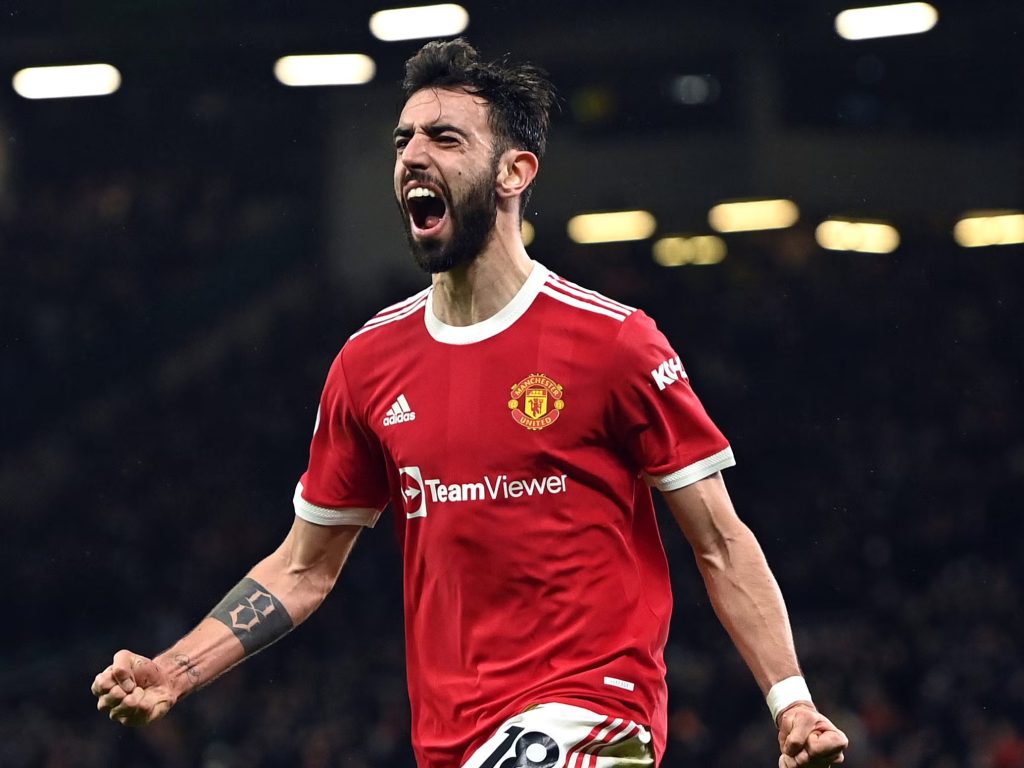
Fernandes’s Record-Breaking Career Statistics:
- Goals: 86 goals (midfielder record for United)
- Appearances: 234 games across all competitions
- Premier League Goals: 61 goals (exceptional for midfielder)
- Assists: 67 career assists
- Penalties: 29 successful penalties
- Portugal Caps: 78 appearances, 17 goals
- Big Game Goals: 12 goals against top-six opposition
- Captain Appearances: 45 games as captain
The midfielder’s ability to create and score from deep positions revolutionized United’s attack. His penalty expertise, long-range shooting, and vision make him irreplaceable in Amorim’s system. Fernandes’s leadership qualities and work ethic set standards for younger players.
Trophy Cabinet with Bruno Fernandes:
- 1 FA Cup (2024)
- 1 EFL Cup (2023)
- Individual: Premier League Player of the Month (6 times)
- Individual: Manchester United Player of the Year (2021, 2022)
His emotional connection with supporters and commitment during difficult periods demonstrate true leadership. Fernandes represents hope for United’s future and continuity through managerial changes.
For Indian fans, Fernandes embodies everything special about United – creativity, passion, and match-winning ability. His late-career brilliance and dedication to the club make him the perfect ambassador for United’s global fanbase during this rebuilding phase.
Legends & Club Icons
All-Time Greatest Players
Sir Bobby Charlton (1956-1973) – United’s greatest legend whose 249 goals and World Cup triumph epitomized the club’s values. Charlton’s dignity, skill, and longevity established the template for future United legends.
George Best (1963-1974) – The Belfast Boy whose genius on the pitch and charisma off it made him football’s first superstar. Best’s dribbling ability and eye for goal were unmatched in his era.
Ryan Giggs (1990-2014) – The most decorated player in football history with 34 major trophies. Giggs’s longevity, adaptability, and big-game performances defined United’s golden era.
Paul Scholes (1993-2013) – The ginger genius whose passing range and goalscoring ability from midfield were world-class. Scholes’s humility and professionalism epitomized United’s academy values.
Eric Cantona (1992-1997) – The catalyst who transformed United from also-rans to champions. Cantona’s skill, arrogance, and leadership inspired the Class of ’92 and established winning mentality.
Club Records & Achievements
Individual Records
| Record | Player | Achievement |
| Most Goals | Wayne Rooney | 253 goals |
| Most Appearances | Ryan Giggs | 963 appearances |
| Most Caps (England) | Bobby Charlton | 106 caps |
| Youngest Debutant | Duncan Edwards | 16 years, 185 days |
| Most Goals (Season) | Denis Law | 46 goals (1963-64) |
| Most Clean Sheets | Edwin van der Sar | 180 clean sheets |
| Longest Serving | Ryan Giggs | 24 years |
| Transfer Record | Antony | €100 million |
Team Records
| Achievement | Details |
| Biggest Win | United 10-0 Anderlecht (1956) |
| Biggest Premier League Win | United 9-0 Ipswich Town (1995) |
| Longest Unbeaten Run | 29 games (1998-99) |
| Most League Points | 92 points (1999-2000) |
| Highest League Position | 1st (Premier League Champions) |
| Best European Run | Champions League Winners (1999, 2008) |
| Most Consecutive Wins | 14 wins (1904-05) |
| Best Home Record | 18 wins, 1 draw (1999-2000) |
Hall of Fame (Top 5 Players & Managers)
Top 5 Players of All Time
- Sir Bobby Charlton – The gentleman footballer whose goals and dignity defined United
- George Best – The mercurial genius who brought artistry to Old Trafford
- Ryan Giggs – The most successful player in football history
- Paul Scholes – The master craftsman whose passing was pure poetry
- Eric Cantona – The catalyst who transformed United’s mentality
Top 5 Managers of All Time
| Manager | Period | Achievements | Legacy Rating |
| Sir Alex Ferguson | 1986-2013 | 13 Premier League, 2 Champions League, 5 FA Cups | ⭐⭐⭐⭐⭐ |
| Sir Matt Busby | 1945-1969 | 5 First Division, 2 FA Cups, 1 European Cup | ⭐⭐⭐⭐⭐ |
| Ernest Mangnall | 1903-1912 | 2 First Division, 1 FA Cup | ⭐⭐⭐⭐ |
| Jose Mourinho | 2016-2018 | 1 Europa League, 1 EFL Cup | ⭐⭐⭐ |
| Ruben Amorim | 2024-present | 1 FA Cup | ⭐⭐⭐ |
Ferguson’s impact transcends trophies – he created the modern Manchester United. Busby rebuilt the club after Munich tragedy. Amorim’s early assessment reflects his potential but acknowledges the rebuilding challenge ahead.
FAQs for Manchester United Fans
What time do matches kick off in India?
Premier League matches typically start at 12:30 AM IST (weekend) or 1:30 AM IST (midweek). Domestic cups usually begin at 1:30 AM IST.
Where can Indian fans watch Manchester United matches?
Star Sports Network and Disney+ Hotstar broadcast Premier League matches. Sony TEN Network and SonyLIV show FA Cup and EFL Cup fixtures.
Who is the current manager and what’s his style?
Ruben Amorim is the head coach since November 2024. The Portuguese implements a possession-based 3-4-3 formation emphasizing high pressing and wing-back creativity.
What are realistic expectations for this season?
Top-six finish and domestic cup progress represent realistic targets. The absence of European football allows focused domestic preparation.
Who are the key players to watch?
Bruno Fernandes (captain) is the creative heartbeat. Benjamin Sesko provides pace and goals, while Kobbie Mainoo represents academy excellence.
How has the club changed under new ownership?
Sir Jim Ratcliffe’s INEOS investment emphasizes youth development and long-term planning. The approach contrasts with previous short-term thinking.
Why should Indian fans support Manchester United?
United’s rich history, global fanbase, and attacking football suit Indian audiences. The rebuilding narrative provides compelling long-term investment.
What’s the transfer strategy moving forward?
Focus on young, high-potential players rather than established superstars. Investment in academy development and strategic additions for tactical needs remain priorities.