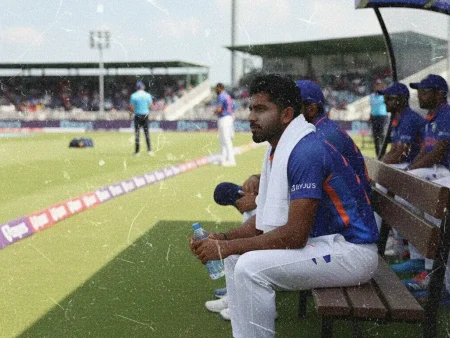

Former India batting coach Sanjay Bangar named Shubman Gill as an opener in his all-time India T20 XI during an ESPNcricinfo segment this week. The selection sparked immediate debate across the cricket world. Bangar’s team featured no MS Dhoni, no Rohit Sharma, and no Jasprit Bumrah.
For Gill, the recognition arrives at a complicated moment in his career.
The 25-year-old recently missed selection for India’s five-match T20 series against New Zealand. He also faces uncertainty ahead of the ICC T20 World Cup 2026. Inconsistent form in the shortest format has kept him out of the national T20 setup. Yet Bangar sees something in the young Punjab batsman that transcends current struggles.
A Selection That Speaks to Potential Over Pedigree
Bangar positioned Gill alongside Virat Kohli at the top of his dream lineup. The full XI reads: Virat Kohli (captain), Shubman Gill, KL Rahul (wicketkeeper), Suryakumar Yadav, Yuvraj Singh, Shivam Dube, Deepak Chahar, Mohammed Shami, Ashish Nehra, Kuldeep Yadav, and Yuzvendra Chahal.
The absence of Dhoni cuts deepest for traditionalists. India’s most successful T20 captain led the team to the inaugural T20 World Cup triumph in 2007. His calm finishes under pressure became the stuff of legend. Dhoni accumulated 1,617 runs in T20 internationals at a strike rate of 126.13.
Rohit Sharma’s omission raises similar questions. The “Hitman” holds the record for most T20 international runs by an Indian with 4,231. He captained India to their second T20 World Cup title in 2024. His four centuries in the format remain unmatched by any Indian batsman.
Bangar made a choice that valued trajectory over trophies.
Understanding the Gill Selection
Those who have watched Gill’s development understand the faith Bangar places in him. The young opener possesses a technique refined through years of domestic cricket and IPL exposure. His ability to play both pace and spin with equal comfort sets him apart from many contemporaries.
Gill’s T20 international numbers tell only part of the story. In 63 T20I matches, he has scored 1,398 runs at an average of 27.41 and a strike rate of 131.77. The raw statistics suggest a player still finding his feet in the format.
But statistics rarely capture what scouts and coaches see in training sessions. They miss the way Gill adjusts his game between deliveries. They overlook his composure when walking out to bat in high-pressure situations. They fail to measure the hunger that drives him to the nets long after teammates have left.
Bangar spent years working closely with India’s batsmen. He watched Gill’s rise through the ranks. The selection reflects intimate knowledge of the player’s ceiling rather than his current floor.
The Weight of Expectation
For Gill, public discussions about his place in hypothetical dream teams carry real weight. He grew up in Fazilka, Punjab, before his family moved to Mohali to support his cricket dreams. His father sold farmland to fund training expenses. The sacrifice embedded a responsibility that Gill carries into every innings.
The comparisons to established legends create pressure that few outsiders truly comprehend. When a former national coach places you alongside Kohli and ahead of Dhoni, the scrutiny intensifies. Every failure becomes amplified. Every success gets measured against impossible standards.
Gill has spoken previously about managing external noise. He prefers to let performances speak rather than engage with debates about his standing in Indian cricket. The approach reflects maturity beyond his years, though it doesn’t eliminate the burden entirely.
Aakash Chopra Offers a Contrasting Vision
Former India opener Aakash Chopra released his own all-time T20 XI on the same program. Not a single player overlapped with Bangar’s selection. Chopra chose: Rohit Sharma, Virender Sehwag, Suresh Raina, MS Dhoni (captain and wicketkeeper), Yusuf Pathan, Hardik Pandya, Axar Patel, Varun Chakaravarthy, Jasprit Bumrah, Bhuvneshwar Kumar, and Arshdeep Singh.
The contrast illuminates how differently cricket minds evaluate talent and legacy. Chopra leaned toward proven performers with extensive track records. Bangar embraced a forward-looking approach that prioritizes skill sets over accumulated achievements.
Neither approach is wrong. Both reflect legitimate philosophies about team construction.
Comparing the Numbers
| Player | T20I Runs | Average | Strike Rate | 50s | 100s |
|---|---|---|---|---|---|
| Shubman Gill | 1,398 | 27.41 | 131.77 | 12 | 1 |
| MS Dhoni | 1,617 | 37.60 | 126.13 | 2 | 0 |
| Rohit Sharma | 4,231 | 32.05 | 140.89 | 32 | 4 |
The table reveals why Gill’s inclusion surprised many observers. Rohit Sharma nearly triples Gill’s run tally. Dhoni’s average surpasses Gill’s by more than 10 runs. Both veterans played significantly more matches, but the gap in production remains substantial.
Bangar’s selection bets on Gill eventually closing or exceeding these numbers. Time will determine whether that faith proves justified.
What This Means for India’s T20 Future
The debate around Bangar’s XI arrives months before the T20 World Cup 2026. India’s selectors face difficult decisions about balancing experience with emerging talent. Players like Gill represent the next generation of Indian cricket. Their development determines the national team’s competitiveness for years to come.
Gill’s exclusion from recent T20 squads suggests selectors currently favor other options. Yashasvi Jaiswal and Abhishek Sharma have claimed opening spots through consistent domestic performances. The competition for places has never been fiercer.
Yet Bangar’s endorsement reminds everyone that reputations can shift quickly in cricket. A strong IPL 2026 season could thrust Gill back into T20 contention. His ODI and Test form proves his fundamental quality remains intact.
The young batsman controls only what happens between the boundary ropes. Everything else amounts to noise.
The Human Element
Behind the statistics and selection debates sits a young man navigating extraordinary circumstances. Gill turned professional as a teenager. He debuted for India at 20. The weight of a nation’s expectations landed on his shoulders before he fully understood what carrying it would require.
Those close to him describe a player obsessed with improvement. He studies footage of his dismissals repeatedly. He seeks advice from senior players across IPL franchises. He treats every net session as an opportunity to add something new to his game.
The journey from Fazilka to hypothetical all-time XIs spans more than geographic distance. It encompasses years of sacrifice, setbacks, and small victories that never made headlines. Bangar’s selection acknowledges that entire journey, not just the runs Gill has scored.
Fan Reaction Splits Down the Middle
Social media erupted when Bangar revealed his selections. Cricket fans worldwide weighed in with passionate opinions on both sides of the debate.
Supporters praised Bangar for recognizing Gill’s potential before it fully materializes. They pointed to his elegant strokeplay and ability to dominate bowling attacks when set. His youth means years of peak performance still lie ahead.
Critics questioned how anyone could build an all-time XI without Dhoni’s leadership or Bumrah’s death-over brilliance. They noted that hypothetical teams should reward proven excellence rather than projected futures. The debate continues across fan forums and cricket discussion boards.
The intensity of reaction demonstrates how deeply fans care about these selections. Dream teams may carry no official weight, but they spark conversations that shape how we remember players and eras.
Looking Ahead
Shubman Gill will likely see many more debates about his place in Indian cricket. The nature of modern sport ensures constant evaluation and re-evaluation of players at every career stage.
What matters most is how he responds when opportunities arrive. His technique provides a foundation. His temperament suggests resilience. His work ethic indicates commitment to long-term excellence.
Sanjay Bangar looked at all available options for his dream T20 XI and chose Shubman Gill. The selection may prove prescient or premature. Only time and performances will deliver the final verdict.
For now, a young man from Punjab continues working toward goals that existed long before any former coach mentioned his name in the same breath as legends.